
%20Success%20Stories/3M%20-%20main.jpg)
%20Success%20Stories/Baylor-CS-Image-2.jpg)
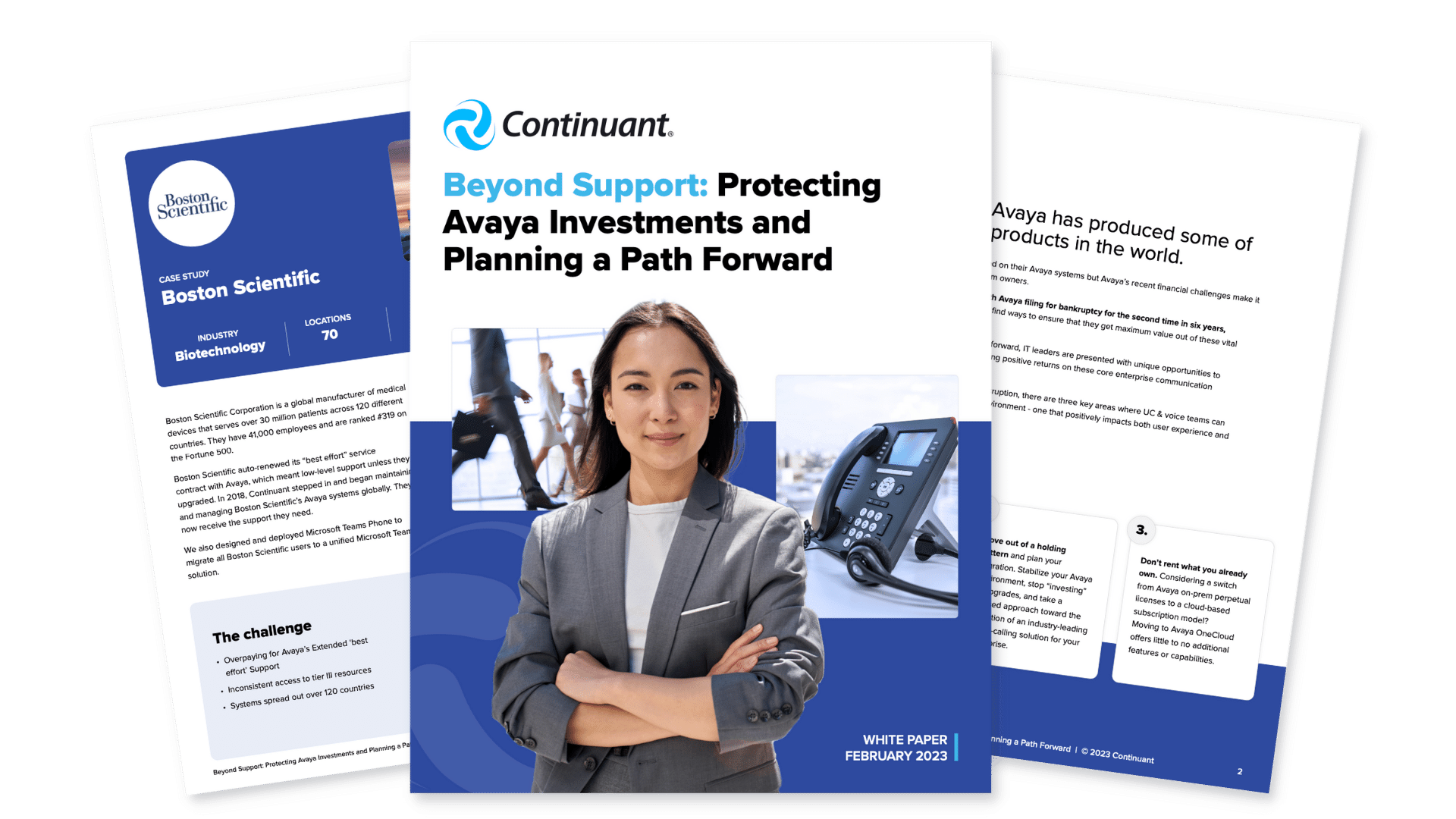


There's a number that nobody tracks on your monthly P&L but everyone feels: the revenue you lost because the phone rang and nobody answered.
In a 500-bed health system with a centralized call center, a missed call is a minor inefficiency. In a 25-bed Critical Access Hospital or a 15-provider FQHC, it hits the bottom line. In many cases, it’s the difference between making payroll and not.
The scale of this problem is staggering. Industry estimates put the cost of missed patient visits at over $150 billion annually across the U.S. healthcare system. That's not a policy abstraction. It shows up in your no-show rate, your after-hours voicemail, and patients who called a competitor. You didn't pick up.
Walk through a typical day at a small hospital or FQHC front desk:
80 to 120 inbound calls. Two or three staff members juggling phones, check-ins, insurance questions, and the patient standing in front of them. During peak hours, calls roll to hold or voicemail. After 5 PM, everything goes to voicemail.
Now quantify what's in those missed calls. Appointment requests. Prescription refills that trigger billable encounters. New patient inquiries. Follow-up scheduling that prevents gaps in care. Insurance pre-authorizations that, if delayed, turn into denials downstream.
Each missed call represents a patient who might call back but also might not. That same patient may find another provider, walk into an ER, or simply not get care. For FQHCs where every encounter is potentially a 340B-eligible prescription opportunity, the financial impact compounds. For rural hospitals, one provider may make up 20 to 30 percent of total volume. A scheduling gap affects more than one appointment. It cascades through the entire revenue cycle.
The response to an overwhelmed front desk is usually predictable. Hire another receptionist. Use an answering service. Add another phone line.
Here's what actually happens.
Hiring is slow, expensive, and temporary. Healthcare administrative staff turnover is running above 25% nationally. You're spending weeks recruiting, weeks training, and then watching that investment walk out the door in six months. In rural markets where the labor pool is already thin, the timeline stretches even longer.
Answering services are a black box. They take messages. They don't book appointments. They don't verify insurance. They don't speak your patient's language. And every message that sits in a queue until the next business day is a patient who might not call back.
More phone lines don't solve the staffing gap. If nobody's available to answer, another line just means another voicemail. You've added capacity without adding capability.
Here's the fundamental problem. The front desk model was designed for a 9-to-5 world, and patients don't operate on that schedule. They call during lunch breaks. They call after work. They call on weekends when symptoms get worse. If nobody answers, the system fails silently. No alarm goes off. No report is generated. No one measures what was lost.
This is where the conversation needs to shift from "answering service" to "patient access infrastructure."
Modern AI voice agents, like the platform we deploy with Nucleus, are conversational systems built on enterprise telecom infrastructure. They answer inbound calls with a natural human voice, 24 hours a day, in any language. And they don't just take messages.
They answer every call instantly. No hold times. No after-hours voicemail. Patients get a live, intelligent conversation whether they call at 2 PM or 2 AM.
They book, cancel, and reschedule appointments. Integrated directly with your practice management system. The AI checks availability and confirms — no staff intervention required.
They verify insurance and pre-qualify patients. Copay collection, eligibility checks, and procedure pre-qualification happen before the patient walks in the door. That means cleaner claims, fewer denials, and faster reimbursement.
They reduce no-shows by up to 40%. Automated reminders, waitlist management, and proactive outreach keep schedules full and revenue flowing.
They speak any language. For FQHCs serving diverse communities, this eliminates a major access barrier without hiring multilingual staff. For rural hospitals serving tribal or immigrant populations, it ensures no patient is turned away by a language gap.
One clinic owner said setup took under an hour. It quickly reduced missed calls and after-hours disruptions. It also cost far less than a temp or answering service.
Large health systems have call centers and dedicated patient access departments. They can absorb the inefficiency. You can't.
If you're a 15-provider FQHC, every call matters more. Your patients have fewer alternatives. Your staff is already doing three jobs. And your margin for error on quality metrics and patient satisfaction scores is razor thin.
 The financial pressure is not theoretical. In Oklahoma alone, 48 rural hospitals — 64% of all rural hospitals in the state — are at risk of closure. Twenty-two face immediate risk of shutting down within the next two to three years. Two closed in 2025. Nationally, over 750 rural hospitals face the same threat.
Are these hospitals failing because they give bad care? Of course not! They're failing because the revenue model is broken. They're struggling with inadequate reimbursement, rising costs, and an inability to capture every possible patient encounter.
AI-powered patient access doesn't fix reimbursement rates. It does, however, ensure that every patient who wants care gets connected to the system. It eliminates the silent revenue leak that compounds month after month with no one measuring it.
For FQHCs, the stakes are equally high. Operating margins collapsed after COVID relief funding ended, dropping to a range of 0.3% to 11.4% for rural FQHCs. The 340B Drug Pricing Program helps many FQHCs stay financially stable. Unfortunately, it only generates revenue when patients come in for visits.
Every call that goes to voicemail is a potentially vital 340B-eligible interaction that never occurred.
At Continuant, we've managed healthcare communication infrastructure for nearly 30 years across more than 5,000 enterprise environments. We know the phone systems, the UC platforms, and the networks that healthcare organizations run on. Our customers have always trusted us to keep that infrastructure working.
Now we're making it intelligent.
AI-powered patient access through Nucleus is the entry point. Beyond that is a broader, integrated model we call the Operator Stack. It includes AI voice agents for patient capture and r4.ai decision intelligence for predictive analytics. It also includes CHS provider credentialing to reduce onboarding delays and revenue cycle management for clean claims and better collections. Each layer generates data that makes every other layer smarter.
A clinic that uses AI for patient access gets value right away. It has fewer missed calls, lower no-show rates, and better after-hours coverage. A clinic that uses the full Operator Stack gets a closed-loop system. Patient capture, provider readiness, claims optimization, and predictive intelligence all reinforce each other.
No other mid-market partner is offering this combination. And for FQHCs and small hospitals that can't afford to manage five different vendors for five different problems, that matters.
If your front desk is overwhelmed, let’s talk.
If your after-hours calls go to voicemail or your no-show rate is rising, let’s talk.
It’ll only take 15 minutes.
We'll walk you through how AI voice agents work with your current systems. We'll also compare the real cost to your answering service or added staff and share what other clinics and community health centers see in the first 90 days.
No pitch deck. No pressure. Just a straightforward look at whether this fits your operation.
Ready to stop losing patients to voicemail?