
%20Success%20Stories/3M%20-%20main.jpg)
%20Success%20Stories/Baylor-CS-Image-2.jpg)



Contact Centers and the tools with which organizations build customer experience have changed a lot in recent years. We’ve gone from traditional call centers to unified platforms letting agents engage with customers in the cloud. The transformation of CX technology continues with AI at its heart.
AI and automation have already changed CX significantly, and more changes are on the Horizon. Here are seven ways AI and automation are transforming customer experience in 2025 and what they mean for modern contact centers.
Generative AI has rapidly evolved from a novelty into a core capability in customer experience platforms. Modern CCaaS environments now rely on it to power chatbots, automate responses, and generate real-time summaries that shorten call wrap-up time and reduce human error.%20Website%20Imagery/Stock%20images%20(old)/Woman%20on%20phone%20with%20headset-Large.jpeg?width=400&height=267&name=Woman%20on%20phone%20with%20headset-Large.jpeg)
Where early chatbots struggled with rigid decision trees, today’s AI systems handle nuance. They can interpret intent, recall prior interactions, and tailor replies to tone and sentiment. This makes customer conversations feel less like transactions and more like dialogues.
Generative AI also supports behind-the-scenes productivity. Auto-summarization, email draft generation, and AI-driven case notes save agents several minutes per interaction—time that compounds across thousands of calls per day. For most organizations, these micro-efficiencies translate directly to improved SLAs and measurable ROI.
Agent assist technology has shifted from experimental pilots to enterprise-scale deployments. Embedded in contact center interfaces, these AI “co-pilots” analyze live conversations and surface relevant data instantly—customer history, product documentation, or suggested resolutions.
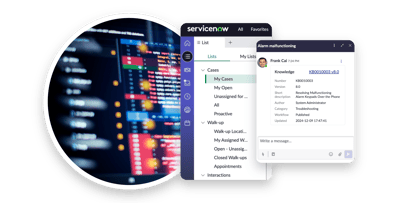 Unlike traditional knowledge bases, which rely on manual search, co-pilots proactively surface answers based on conversation context. The best implementations also track which suggestions agents accept or override, continuously refining accuracy and relevance.
The outcome: shorter handle times, consistent messaging, and reduced cognitive load for agents. Crucially, AI remains advisory, not authoritative. Agents maintain final control, which builds trust and adoption rather than resistance.
Voice remains the most trusted customer channel, and AI is making it smarter. Advances in low-latency speech recognition, real-time translation, and natural language understanding now allow voice bots to respond fluidly without the robotic lag that once defined IVR systems.
AI-powered voice systems can detect sentiment shifts mid-conversation, routing frustrated customers directly to a live agent or prioritizing calls with emotional urgency. When escalation is required, the transcript, intent, and summary seamlessly transfer to the human agent—no repeated explanations required.
The result is a human-centric experience powered by machine precision: efficiency for the business, empathy for the customer.
 In the past, quality assurance teams could only review a fraction of interactions. AI analytics has expanded that scope exponentially. Every call, chat, and message can now be evaluated for compliance, tone, and resolution accuracy.
AI-powered QA systems automatically flag outliers (both high-performing and underperforming interactions), and highlight coaching opportunities. Supervisors gain dashboards that aggregate performance metrics, allowing targeted feedback instead of one-size-fits-all reviews.
This isn’t about replacing supervisors; it’s about giving them a smarter lens. Agents receive tailored, data-driven coaching that accelerates development while improving customer satisfaction.
For years now, businesses have understood that reactive customer service isn’t good enough. Proactive engagement is key, and easier than ever to build into a CX strategy with advancements in AI, mainly behavioral analytics and predictive automation.
 For example, let’s say the system has detected an increase in dropped outbound calls. It can determine which regions and SIP trunks are most affected, flag anomalies, open internal tickets, and send notifications to customers ahead of time.
Or how about API timeouts from an integrated payment portal? What would normally be the bane of every customer’s existence instead gets detected early, with automated alerts going out to IT and the affected customers. The issue gets resolved faster, and agents get to spend less time answering strongly worded “why didn’t my payment go through” calls.
As this trend takes off, expect sharp increases in loyalty. Customers are looking for businesses they interact with to know them, and what better way to do that than with advanced AI.
AI plays a central role in most aspects of business, including CX. As time goes by, that only becomes more significant.
AI, however, is far from perfect. It can make biased decisions, overlook details in compliance and regulations, and even hallucinate information. As this problem persists, leading companies in 2025 and 2026 will need to engage proper safeguards.
These include human-in-the-loop reviews, clear escalation logic, transparent model behavior, and strict data privacy controls. Each feature keeps organizations in line with AI-related ethics and increases their credibility with customers.
Customers won’t be happy if they’re stuck with a long wait time, but they’ll be more forgiving of that than misleading information or offensive answers. Building AI systems that are reliable, accountable, and explainable will determine who thrives in the long run.
There’s a noticeable pattern in the history of communications technology. When new features are introduced, they come in the form of siloed solutions that get tacked on to existing platforms.
For example, when Salesforce and other CRM platforms first came around, they relied on a patchwork of third-party plug-ins to handle call logging, analytics, and omnichannel messaging.
The same pattern has played out in contact centers. A decade ago, companies would buy separate speech analytics engines or “voice mining” tools to evaluate calls after the fact. 
Today, platforms like Genesys Cloud and C4 come with those features built in, allowing for real-time transcription, sentiment analysis, and quality scoring without moving data across systems.
Expect this pattern to play out as AI continues to advance. A new technology will come around in the form of a siloed, third-party app before it becomes part of a consolidated platform. Cost-effective strategies for acquiring new technology must take this into account.
AI and automation won’t replace the contact center. They will, however, redefine it. The future of CCaaS is a blended environment where humans and machines collaborate seamlessly: bots handling routine tasks, AI surfacing insights, and humans delivering empathy and expertise.
For leaders in 2025, the opportunity is clear. Adopt AI deliberately. Start with targeted, high-value use cases. Invest in data, governance, and human adoption. Balancing efficiency with humanity is the key to elevating customer experience, and that’s the true competitive advantage.
Ready to see what AI-driven CX looks like in action? Talk to our experts and explore how C4’s AI-powered platform can transform your customer experience strategy.